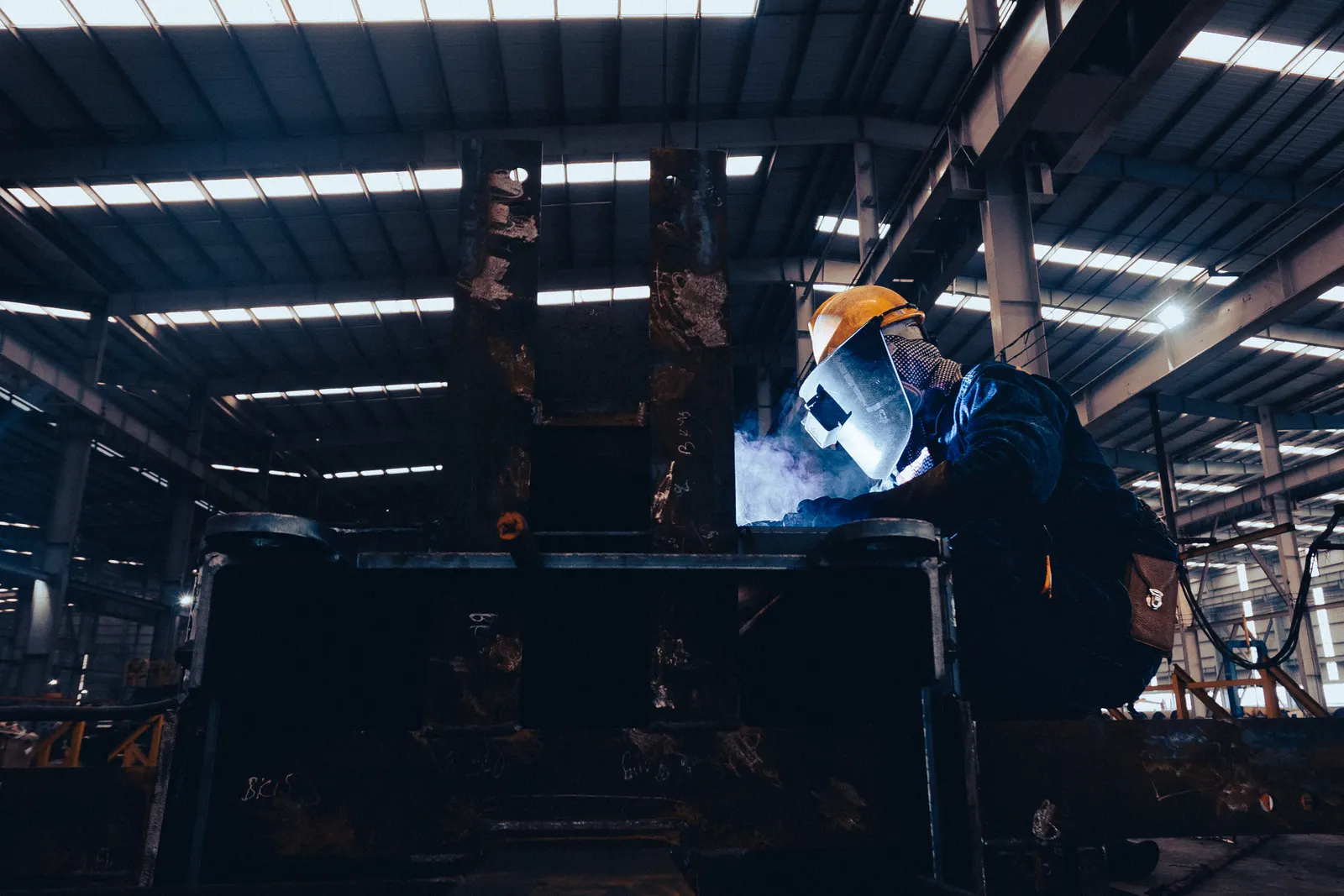
Scrap recovery for fabrication shops and manufacturing plants.
- Where we work
- Fabrication shops, machining works and plants
- How we fit in
- Fixed collection schedule, with separate bins per metal and swarf collected drained
- Scheduling
- Fixed weekly or monthly collections, with on-call swaps when a large job finishes.
Overview
Fabrication shops and plants produce scrap every shift. Plate and section offcuts, turnings and rejected stock build up quickly, and a crowded floor is a slower and less safe one.
Offcuts, swarf, rejected stock and production scrap, collected on a fixed schedule and turned into a recorded return.
A fixed collection schedule keeps floors clear and turns offcuts into a regular, recorded return. Bins are sized to your volumes and placed where your team works.
Carbon steel, stainless steel, aluminium and copper are kept in separate bins, and turnings and swarf are collected apart from solid offcuts.
Each month you receive a statement by grade and weight, so scrap becomes a line your finance team can track.
Typical scrap streams on site
What we usually recover in this sector, where it comes from and how it is handled.
- Ferrous
Plate and section offcuts
- From:
- Cutting, profiling and fitting
- Handling:
- Collected in dedicated bins and graded by thickness and type
- Mixed
Rejected and surplus stock
- From:
- Non-conforming parts, surplus material and obsolete stock
- Handling:
- Graded by material, with stainless and non-ferrous valued on their own
- Mixed
Turnings and swarf
- From:
- Machining, turning and milling
- Handling:
- Collected separately from solid scrap and graded by metal
- Non-ferrous
Aluminium and copper production scrap
- From:
- Extrusion, busbar, winding and assembly work
- Handling:
- Kept in separate bins and graded by alloy
A fixed schedule, a clear floor
Scrap that is collected regularly never becomes a hazard. Our schedule follows your production, not the other way round.
Scheduled collections
Weekly or monthly collections, with extra swaps when you need them.
Separate bins per metal
Carbon steel, stainless, aluminium and copper kept apart from the start.
Safe yard movements
Bins placed clear of walkways and loading done to your site rules.
A recorded return
Monthly statements by grade and weight, settled on the terms in your contract.
What we keep separate
Material that is not scrap, or that loses value when mixed, never goes into a scrap load.
Coolant and cutting fluids
Swarf is collected drained. Spent coolants and oils are scheduled waste for licensed handlers.
Stainless steel
Stainless offcuts and turnings are kept out of carbon steel bins.
Paint and blasting waste
Paint residue, thinners and spent blasting media stay out of scrap and go to licensed contractors.
How it is documented
Records your procurement, HSE and audit teams can file.
- Weighbridge ticket for every collection
- Monthly tonnage and value statement by grade
- Delivery orders and transport records
- Settlement against each statement, as your contract sets out
Services for this sector
Each service can be contracted on its own or as part of one programme.
Related materials
The grades this sector most often produces. Our materials page lists every stream we recover.
All materialsOther sectors in this group
Plants, mills and mines that produce scrap every shift and need it graded so its value is kept.
Looking for a scrap programme across your plants?
Tell us your volumes and metals, and we will propose bins and a collection schedule.