
Safety and compliance come before tonnage.
We work inside your permit-to-work system and your site rules. If a job cannot be done safely, it does not start.
- Site rules
- Your standard where stricter
- Incident reporting
- Same day, to Myscrap and to you
- Stop work
- Anyone, without reprisal
How we approach health, safety and environment
Scrap recovery on an operating site means heavy loads, cutting, lifting, mobile plant and traffic, often next to live process equipment. Every job is planned around those hazards before our crew mobilises, and the controls are agreed with your team.
We meet the Occupational Safety and Health Act 1994, the Environmental Quality Act 1974 and the Environmental Quality (Scheduled Wastes) Regulations 2005 as a minimum. Where your site standard is stricter, your standard applies.
Every job is resourced with the people, equipment and time needed to work safely. Subcontractors engaged by Myscrap are briefed on the same policies before they start. Our HSE policies are reviewed at least once a year.
How we work on your site
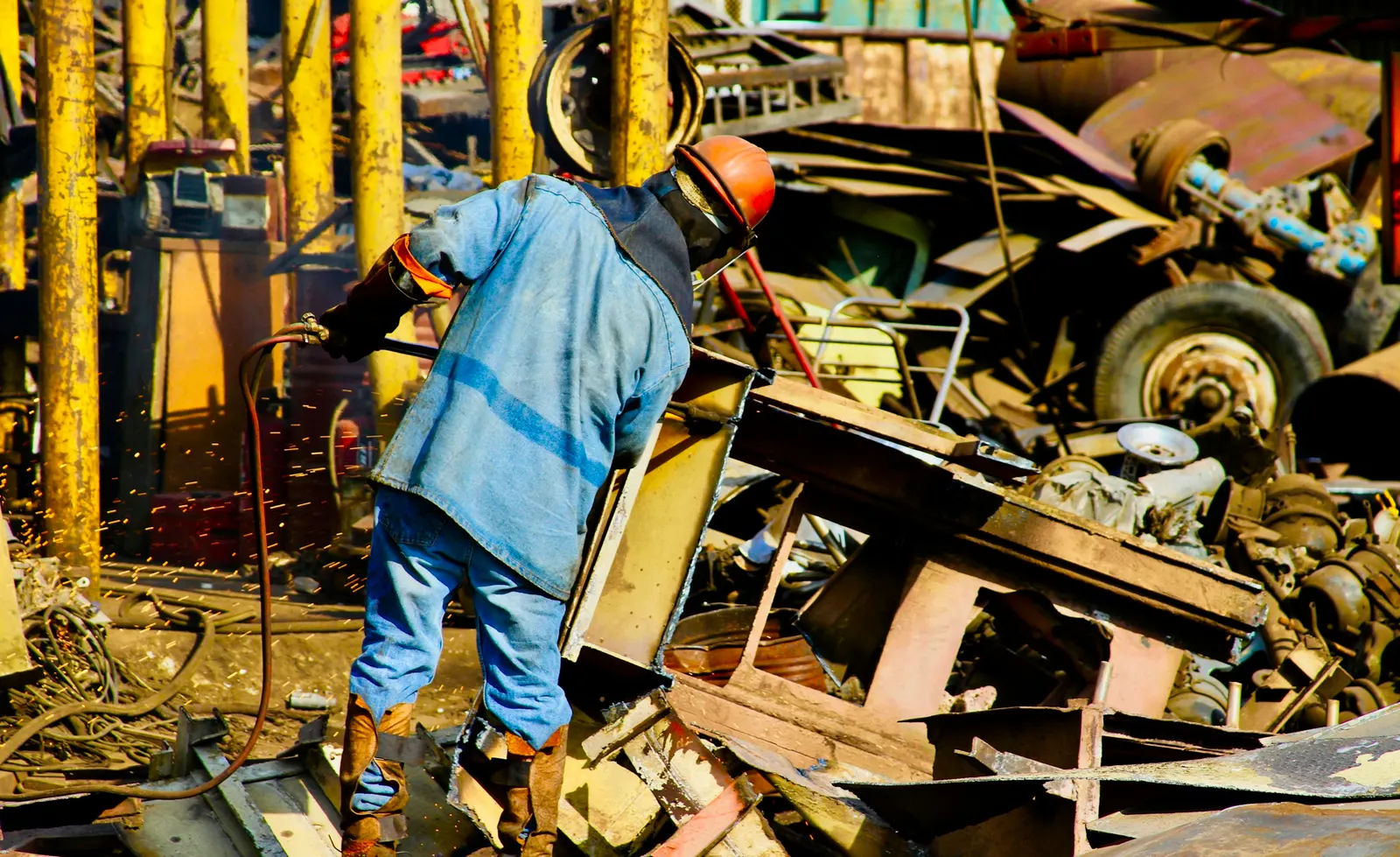
Our crews work inside your permit-to-work system, your site rules and your emergency arrangements. No work starts without the required permit.
Site induction
Every crew member completes your site induction before entry.
Job hazard analysis and method statement
Prepared for every job before mobilisation, with the controls agreed with your team.
Permit-to-work
Work runs under your permit system. Hot work is carried out only under an approved permit.
Toolbox talk before every shift
Covering the day's tasks, hazards, controls and any changes on site.
Protective equipment
Provided to your site standard, worn and maintained.
Competent people
Cutting, lifting and plant operation are done only by people competent for that task.
Housekeeping
The work area is left cleaner than we found it.
Four commitments on every job
What you can hold us to, from the first permit to the final weighbridge ticket.
Permit-to-work and site inductions
Crew briefed and inducted before mobilisation.
Documented transport and processing
Movements documented from site to yard to mill.
Scheduled waste kept separate
Contaminated items routed to licensed handlers, never mixed with scrap.
Zero illegal dumping
Every load accounted for on paper and by weight.
Controls across the job
The same controls follow your scrap from the first permit to the partner furnace.
Before mobilisation
Hazards are assessed and the controls agreed with you before the crew arrives.
- Job hazard analysis and method statement
- Crew inducted to your site rules
- Plant, lifting gear and vehicles inspected
On site
Work runs under your permit, with the day briefed at the start of every shift.
- Toolbox talk before every shift
- Loads checked for contamination before collection
- Scheduled waste kept separate from scrap
In transit
Every load leaves your site with a weighbridge ticket and a transport record.
- Vehicles checked for leaks before entering a site
- Spill kits carried by every crew
- Any spill or loss of load reported at once
At the yard
Material is weighed on calibrated weighbridges and graded by metal and specification.
- Gross, tare and net weight on every ticket
- Deductions stated with the reason
- Supplied to partner furnaces and steel mills
Scheduled waste and environmental controls
Material that is, or contains, scheduled waste is not accepted as scrap. It is identified on site, kept separate and routed to contractors licensed by the Department of Environment, with you as the waste generator.
Recovered metal is segregated by grade so partner furnaces and steel mills can remelt it, rather than downgrade it or send it for disposal.
Documentation we provide
- Weighbridge ticket for every load
- Delivery orders and transport records
- Certificates of disposal on request
- Monthly tonnage and value statements
| Material | How it is handled |
|---|---|
| Ferrous and non-ferrous scrap | Segregated by grade, weighed, ticketed and supplied to partner furnaces and steel mills. |
| Oily sludge and contaminated items | Treated as scheduled waste, kept separate and routed to licensed handlers. Never mixed with scrap. |
| Batteries | Treated as scheduled waste and routed to licensed handlers. |
| Asbestos-lagged pipe | Refused as scrap, or handled under a separate method agreed with you. |
| Spills | Vehicles checked for leaks before entry, spill kits carried, and any spill reported to you immediately. |
Anyone may stop unsafe work
Any person who believes a task presents an imminent risk to people, the environment or property may stop it, whatever their role. No one is penalised for stopping work in good faith, and schedule, tonnage or cost never justify carrying on.
MYS-POL-07 Stop Work Authority PolicyHow a stop is raised and resolved
- 1
Stop
Call a clear stop to the people involved and make the area safe, if this can be done without further risk.
- 2
Notify
Inform the Myscrap supervisor and the client's area authority or permit holder at once.
- 3
Assess
The supervisor, the person who called the stop and the client representative review the hazard together.
- 4
Correct
Put controls in place, revise the method statement or permit if needed, and brief the crew on the change.
- 5
Resume
Work restarts only when those involved agree the hazard is controlled and the client has authorised the restart where its permit system requires it.
- 6
Record and learn
Every stop is recorded, including its outcome, and is reviewed so that the lesson is applied to future jobs.
Our published HSE policies
Each policy is a controlled document with a code, a revision and an issue date. Read it here or download the PDF for your vendor file.
MYS-POL-01
Occupational Safety and Health Policy
How Myscrap protects its people, client personnel and the public on every site, in line with the Occupational Safety and Health Act 1994.
Revision 1.2, issued 2 November 2026
MYS-POL-02
Environmental Policy
How Myscrap prevents pollution, handles scheduled waste through licensed parties and keeps every load traceable from the client gate to the receiving mill or furnace.
Revision 1.2, issued 2 November 2026
MYS-POL-06
Drug and Alcohol Policy
Myscrap applies zero tolerance to drugs and alcohol on client sites, requires every worker to be fit for work and supports client testing programmes.
Revision 1.2, issued 2 November 2026
MYS-POL-07
Stop Work Authority Policy
Any person on a Myscrap job may stop work they believe is unsafe, without reprisal. This policy sets out how a stop is raised, resolved and recorded.
Revision 1.2, issued 2 November 2026
Need our HSE documents for a tender or vendor registration?
Our compliance team can send our policies and walk your HSE team through how we would work on your site.
Appoint one accountable partner for your scrap.
For invitations to bid, site scrap programmes and decommissioning projects across Peninsular Malaysia.